
An interview needs to be pointed, informative, and brief. If you don’t know how to you can do this, then the answer is good scheduling is the key. You will be able to conduct a good interview and carry it out successfully from beginning to end if you use a proper interview schedule template. However, an interview schedule template can help you to direct discussion during the interview by having a ready set of questions.
Imagine the chaos of a high-stakes hiring week where you are juggling multiple candidates, various time zones, and several busy department heads. You want to provide a professional experience that reflects your company’s culture, but manually coordinating every meeting often leads to overlapping slots and communication gaps. This is where a professionally designed interview schedule template becomes an essential asset, simplifying the complex logistics of candidate management and ensuring total consistency across your hiring pipeline. By utilizing a structured interview calendar, you can easily organize your interview timeline and maintain a clear candidate tracking system that keeps everyone aligned. Integrating a comprehensive interview agenda and a detailed interview checklist helps eliminate guesswork, while a standardized interview rubric ensures fair evaluations. Whether you are managing a high-volume recruitment process or a specialized role, these tools optimize your interview coordination, refine your hiring workflow, and provide the credibility needed to secure top talent efficiently.
It is highly advised to use an interview schedule to make sure that no one’s time is wasted, taking into account the length of time needed to complete an interview based on why it is performed and the schedule of the person who has to be interviewed. So an interview schedule template is quite a useful tool to arrange a proper timeframe to conduct the interviews on time.
The Importance of a Structured Interview Schedule Template
A well-designed interview schedule template is essential because it transforms a chaotic hiring process into a professional and streamlined operation. In real-world corporate environments, these templates provide the formal recognition and documentation necessary to ensure that every candidate is evaluated against a consistent set of standards. By maintaining a structured format, organizations can avoid bias and ensure that critical technical and behavioral competencies are addressed, which ultimately builds institutional credibility and protects the company from legal inconsistencies.
Beyond simple organization, the use of structured documentation serves as a psychological motivator for both the interviewer and the candidate. When an interview follows a clear, professional trajectory, it signals to the applicant that the organization values their time and takes the selection process seriously. This level of professionalism mirrors the impact of a formal certificate, as it validates the candidate’s achievements and creates a sense of accomplishment through a rigorous, transparent vetting process. Just as a well-structured certificate provides a tangible record of success, an interview template serves as the foundational record that validates a hire’s qualifications. Utilizing a standardized format ensures that every step of the professional journey is documented, credible, and aligned with global industry standards.
Free Interview Schedule Template
Check out the below ready-made and amazing interview schedule template that is super easy to use. This template is available in Microsoft Excel document and allows you to easily put the details in no time. Using it, you can keep track of the details of the interviews you are going to conduct such as date, time, applicant name, role, and additional notes. Since the template is provided in Excel format, so you can easily adjust the elements according to your own preferences. Therefore, feel free to download this template and start preparing your own interview quickly.

Please click on this download button to grab this amazing interview schedule template.

Mastering the Art of Interview Schedules and Certification
Understanding the various types of interview schedule templates is critical because the structure of an evaluation directly influences the quality and consistency of the data collected. Depending on the goal—whether it is to filter a large pool of applicants, assess technical proficiency, or gauge cultural fit—the format of the interview and the subsequent certification of the candidate’s success must adapt. A rigid, structured schedule is essential for legal compliance and fairness in corporate hiring, while a flexible, semi-structured approach is better suited for qualitative research or creative roles. Similarly, the documentation that follows these interviews—the certificates—must vary based on the level of achievement and the nature of the qualification being granted.
The Certificate of Completion
The most common starting point in many professional and educational journeys is the Certificate of Completion. This document serves as a formal acknowledgment that an individual has finished a specific course of study or a training program. Unlike higher-level certifications, it does not necessarily imply that the person has mastered a complex skill set or passed a rigorous examination, but rather that they have invested the required time and engaged with the provided material. These are frequently used in corporate onboarding or short-term professional development workshops where the primary goal is to ensure that all employees have been exposed to the same foundational information.
As a candidate moves beyond simple participation and demonstrates a specific level of competence, the documentation evolves into the Certificate of Achievement. This format is designed to highlight a particular accomplishment or the mastery of a specific skill set. While a completion certificate tracks attendance, the achievement certificate validates a result. For example, in a technical interview process, a candidate might receive this after completing a high-pressure coding challenge or a project simulation. It signals to future employers that the individual did not just sit through a class, but actually produced a tangible, successful outcome that meets a predefined professional standard.
The Professional Certification
When a candidate demonstrates expertise that is recognized by an industry body or a regulatory authority, the process culminates in a Professional Certification. This is a much more rigorous document than its predecessors, often requiring the candidate to pass a standardized exam or undergo a comprehensive peer review. Professional certifications are the gold standard in fields like medicine, accounting, and information technology because they provide a universal benchmark of quality. These certificates do not just reflect a one-time success but often mandate ongoing continuing education to maintain validity, ensuring the professional remains current with evolving industry trends.
In certain specialized environments, particularly within the arts or high-level academia, the focus shifts toward the Diploma or Degree Certificate. These documents represent a holistic journey of learning rather than a single skill or a short course. They signify a comprehensive educational foundation and are typically the result of years of structured interviews, assessments, and practical applications. Because these certificates carry the most weight in terms of long-term career trajectory, they are designed with a formal structure that validates the institutional authority granting the credential, bridging the gap between academic theory and professional practice.
Customizing Your Interview Schedule Template
Customizing an interview schedule template begins with refining the content to align with the specific goals of your hiring process. When you first open the document in a word processor or online editor, your primary focus should be on the text. Start by replacing placeholder text with the actual names of the candidates, the specific job title, and the names of the interviewing panel members. You should also tailor the time slots to fit the length of your interviews, ensuring there is enough buffer time between sessions for the interviewers to collaborate and write their initial notes. If you have a complex multi-stage process, you can easily add new rows or columns to account for different types of assessments, such as technical tests or cultural fit screenings.
Once the information is accurate, you can use design tools to make the document more professional and easier to read at a glance. Most modern editors allow you to modify the visual hierarchy by changing font sizes and weights, which helps distinguish between section headers and detailed time slots. You can apply corporate branding by updating the color scheme of the table borders or header cells to match your company’s palette. If the schedule feels too cluttered, adjusting the cell padding or increasing the line spacing can provide much-needed white space, making the document less intimidating for both the hiring team and the candidate.
Finally, optimizing the layout ensures the schedule is functional across different viewing platforms. If you intend to print the schedule for a physical folder, you might want to adjust the page orientation from portrait to landscape to accommodate more columns without cramping the text. For those using online collaborative editors, you can integrate hyperlinks directly into the schedule, linking to the candidate’s portfolio or the virtual meeting room. Before finalizing the document, it is helpful to export the file as a PDF to lock the formatting in place, ensuring that the layout remains consistent regardless of which device your team uses to access the schedule.
Printable Schedules Archives - Word Excel Templates Download Free Word Excel Templates
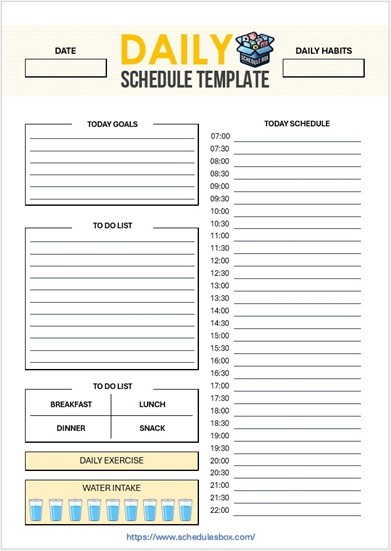
- The Ultimate Guide to Using a Daily Schedule Template for Peak Productivity
 on May 30, 2026
We have all experienced the “productivity paradox”: a day where you are incredibly busy from sunrise to sunset, yet by 6:00 PM, you realize you didn’t […]
- The Ultimate Guide to Using a Monthly Schedule Template for Maximum Productivity
 on May 30, 2026
We have all been there: a Sunday evening spent staring at a chaotic blur of deadlines, appointments, and half-forgotten commitments. When your obligations live […]
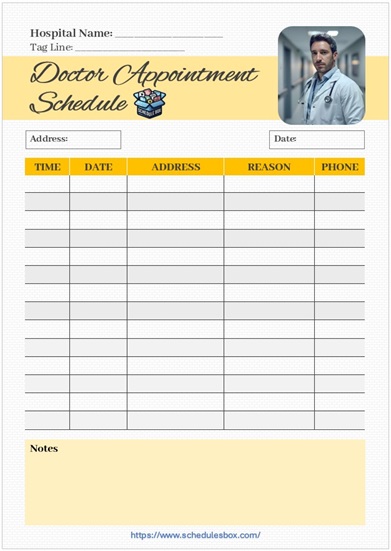
- The Ultimate Guide to Using an Appointment Schedule Template for Maximum Productivity
 on May 30, 2026
We have all experienced the “scheduling nightmare”: the double-booked afternoon, the forgotten client call, or the frantic scramble to remember who is […]
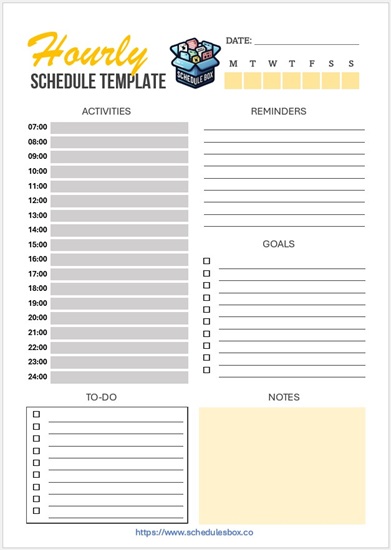
- The Ultimate Guide to Using an Hourly Schedule Template for Peak Productivity
 on May 30, 2026
We have all been there: the clock strikes 5:00 PM, and you realize that despite being “busy” for eight hours, your most critical tasks remain untouched. […]
- How a Professional Staff Schedule Template Eliminates Operational Chaos
 on May 30, 2026
Managing a team is a balancing act. On one side, you have the operational needs of the business—ensuring enough coverage to maintain customer satisfaction […]
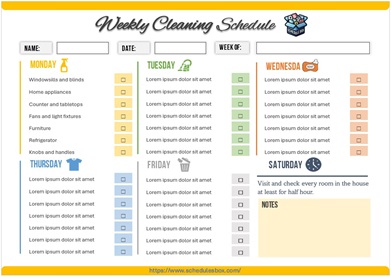
- How to Use a Weekly Schedule Template for Maximum Productivity
 on May 30, 2026
In an era of constant notifications and overlapping commitments, the ability to organize one’s time is no longer just a “soft skill”—it is a critical […]
- How a Construction Schedule Template Ensures On-Time Delivery
 on May 30, 2026
In the construction industry, time is quite literally money. A single day’s delay in pouring concrete or a late shipment of HVAC units can trigger a domino […]
- Preschool Schedule Template Guide: Balancing Structure and Play for Early Childhood Success
 on May 30, 2026
Creating a predictable environment is one of the most critical components of early childhood education. For educators and childcare providers, the challenge […]
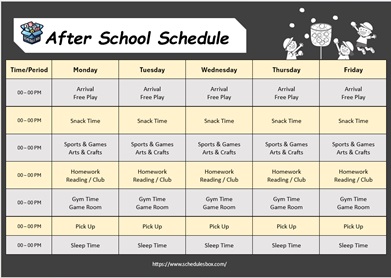
- How an After-School Schedule Template Restores Family Balance
 on May 30, 2026
The transition from the structured environment of a classroom to the freedom of home is often the most chaotic part of a child’s day. For parents, this […]
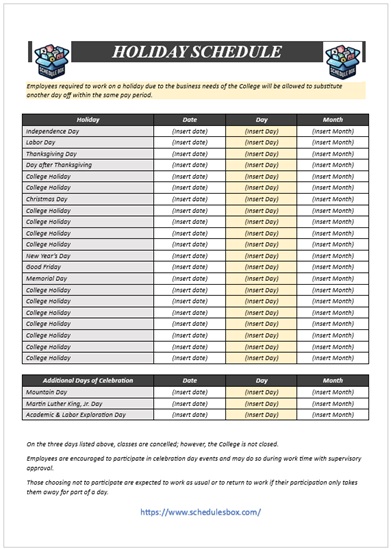
- Holiday Schedule Template: The Ultimate Guide to Streamlining Company Time-Off and Seasonal Planning
 on May 30, 2026
Managing a workforce requires a delicate balance between maintaining operational productivity and respecting the need for employee rest and recuperation. One […]


